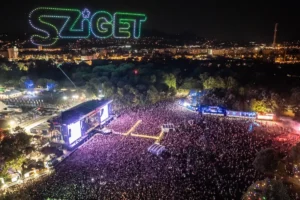


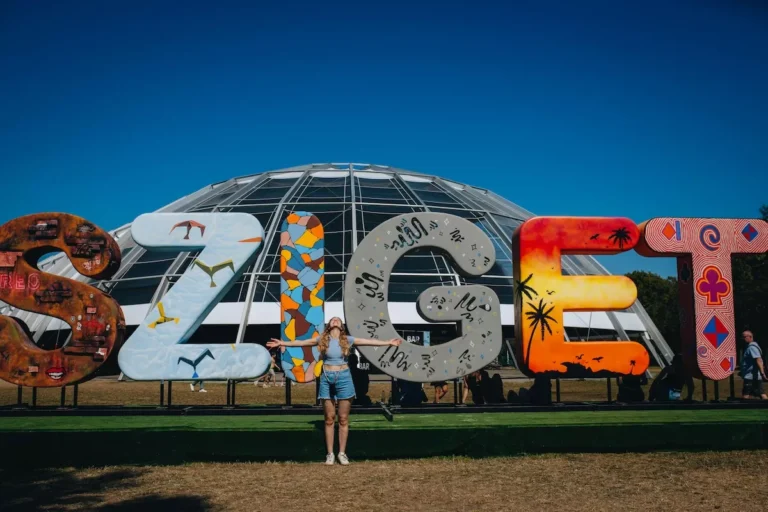
Budapest is entering one of the busiest weeks of its summer calendar as Sziget Festival 2026 opens today, August 11, bringing international artists, performers and visitors to Óbuda Island for five days of music, art and entertainment.
This year’s headline line-up includes Florence + The Machine, Lewis Capaldi, Twenty One Pilots, Bring Me The Horizon and Zara Larsson, alongside a large international electronic music programme featuring artists such as Peggy Gou, Sara Landry, Argy, Richie Hawtin, Anfisa Letyago, Dixon, Joris Voorn and WhoMadeWho.
But for Budapest, Sziget is more than a five-day music festival. It is one of the city’s most important international tourism events, attracting visitors who spend not only on festival tickets, accommodation and food, but also on transport, restaurants, entertainment and other services across the capital.

Sziget expects another international crowd
Sziget has evolved from a small gathering first held in 1993 into one of Europe’s largest cultural festivals. The organisers say the event now features more than 1,000 shows across 50 stages, covering genres ranging from pop and rock to hip-hop, house, techno, jazz and alternative music.
The international nature of the audience is central to Sziget’s business model. Visitors are arriving in Budapest by plane, train, bus and car, with the festival itself promoting the city’s transport connections and encouraging visitors to combine the event with a wider stay in the Hungarian capital.
For accommodation providers, restaurants, bars, transport companies and other tourism-related businesses, that makes the festival an important annual demand generator. Recent reporting has put the expected daily attendance for this year’s festival at close to 100,000 people.
A festival that is expanding beyond Óbuda Island
Sziget is also trying to make the festival experience less geographically confined to the island. The 2026 edition introduces Sziget City, an initiative designed to connect festival visitors with Budapest’s wider cultural scene before, during and after the event.
The accompanying Sziget City Pass gives visitors access to public transport, an airport-to-island transfer, entry to one of Budapest’s famous thermal baths and additional benefits. Instead of spending five days primarily on Óbuda Island, international visitors are being encouraged to explore the city.
The new districts reshape the festival experience
Sziget is also expanding the concept of themed festival districts introduced in previous editions. Among this year’s additions is Wonderland, a new district bringing together art, culture and creative spaces.
Other established areas return, including Luminarium, the “Before I Die Wall”, Magic Mirror and Magic Runway, which focus on art, freedom of expression and diversity. Electronic music takes centre stage in the Delta district as dropYard combines hip-hop and street culture with live music, graffiti and skateboarding.
2026 is an important year for Sziget
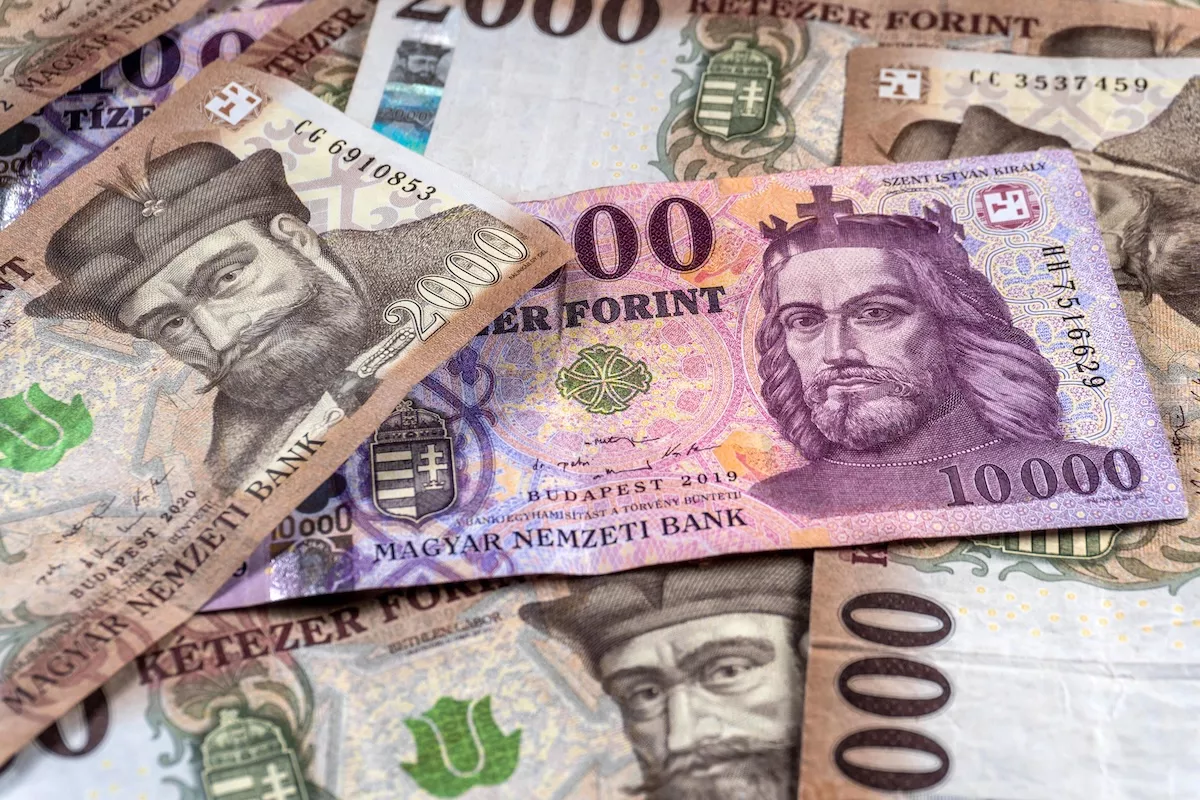
Sziget experienced significant financial pressure in recent years, with the festival’s operating company reporting substantial losses. The 2024 loss reached 3.8 billion Hungarian forints, according to figures reported last year, after a loss of 1.8 billion forints in 2023.
The festival subsequently returned to Hungarian ownership. Founder Károly Gerendai regained control of Sziget after its previous ownership under London-based Superstruct Entertainment, with the change announced in late 2025.