

Budapest is set to transform one of its most prominent downtown parking areas into a large climate-resilient public park after receiving the final regulatory approval required to begin construction planning.
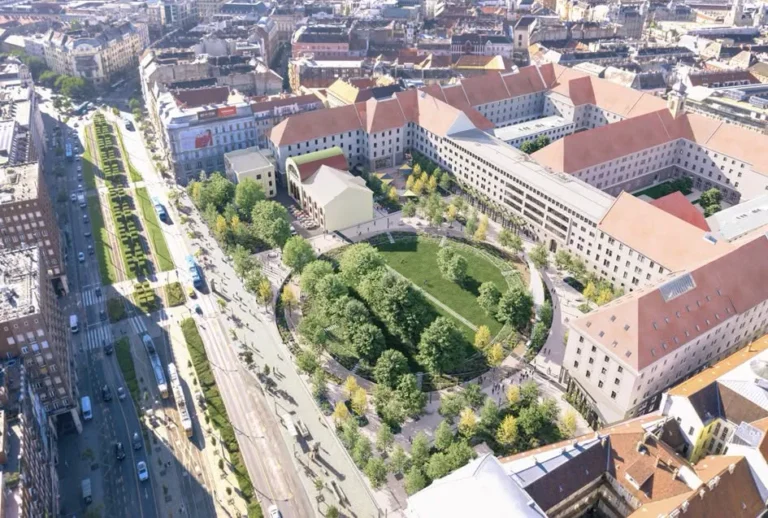
The long-awaited City Hall Park (Városháza Park) will replace a former municipal parking lot in the heart of Budapest with almost 8,000 square metres of green space, creating what city officials hope will become a new civic square and an important public gathering place.
A “sponge city” designed for climate adaptation
Rather than creating a conventional urban park, Budapest is applying principles commonly associated with the “sponge city” concept, an increasingly popular approach to urban planning that seeks to reduce flooding, mitigate heat islands and improve resilience to climate change.

The project includes approximately 7,730 square metres of landscaped green areas, alongside nearly 6,966 square metres of rainwater-retaining surfaces and 850 square metres of permeable paving, allowing rainfall to infiltrate naturally.
A total of 80 new trees will be planted using the Stockholm method, an advanced urban forestry technique that provides larger underground rooting volumes and improved water management. The system enables trees to grow healthier and live longer.
More than a park
As part of Budapest’s Open City Hall concept, the ground floor of the historic City Hall building will be renovated and opened to the public, transforming an administrative complex into a civic destination.
Plans also include the restoration of the historic Ratskeller beneath the ceremonial hall, alongside cafés, terraces and hospitality venues designed to activate the public space throughout the day.
A long awaited seven-year project
Budapest Mayor Gergely Karácsony announced that the city’s government office has issued the final heritage protection permit, bringing an end to a lengthy approval process that delayed the project for years.
According to the mayor, work will now move to the completion of detailed construction plans before physical development begins. The project was first promised during Karácsony’s 2019 election campaign and has spent nearly seven years progressing through design, public consultations, procurement procedures and regulatory approvals.