

Budapest’s chief architect has approved the concept for a 138-metre pedestrian bridge that will connect the Waterfront City development in Óbuda with Óbuda Island, paving the way for one of the capital’s most significant privately financed public infrastructure projects in recent years.
Developed and fully funded by Biggeorge Property, the project is expected to move into the permitting phase within weeks after years of planning and negotiations with local authorities.
A bridge only for people, not traffic
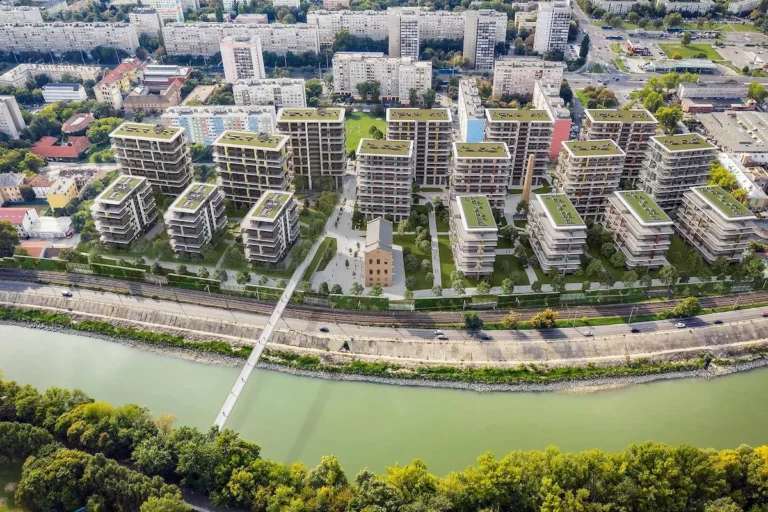
Unlike Budapest’s existing crossings to Óbuda Island, the new bridge has been conceived exclusively for pedestrians. Stretching 138 metres and measuring 3.5 metres in width, the structure will begin at Waterfront City’s central square before crossing the suburban railway line, the embankment and one branch of the Danube.

Designed with elevators, bicycle push rails and architectural lighting, it will become the island’s fourth bridge, joining the Árpád Bridge, K Bridge and H Bridge. However, it will be the first dedicated entirely to pedestrians.
For thousands of residents living both in the new Waterfront developments and neighbouring housing estates, access to the parks and leisure facilities of Óbuda Island will be reduced to just a few minutes on foot.
Seven years in the making
Although the bridge has only now received architectural approval, the idea dates back more than seven years. Biggeorge Property first proposed the project when it launched Waterfront City, arguing that the redevelopment of the former industrial area should include improved public access to the Danube and surrounding green spaces.
Administrative obstacles delayed progress for several years before the Budapest Assembly approved the concept in the spring of 2025. Later that year, the bridge became a formal commitment. The investment, valued at several billion forints, will be financed entirely by the developer without direct public funding.
Brownfield regeneration reshapes Budapest
The bridge forms part of one of Hungary’s largest brownfield regeneration projects, as Waterfront City and the adjacent Waterfront Park occupy land previously dominated by obsolete industrial facilities.

At Waterfront City, Biggeorge Property has already committed to building new transport junctions, renovating surrounding roads and parking areas, extending the Óbuda Promenade and transferring land for public use free of charge. The company also financed the renovation of the nearby Kaszap István Park, covering almost 10,000 square metres.
Alongside the pedestrian bridge, the development includes extensive improvements to pedestrian, cycling and public transport infrastructure, the renewal of a 70-year-old utility network, hundreds of upgraded public parking spaces and the construction of a new street linking Szentendrei Road with the Filatorigát suburban railway station.
Biggeorge Property will develop 130 municipal rental apartments, which Budapest will lease at preferential rates, while the company will contribute HUF 1.2 billion to the Óbuda Municipality for social infrastructure improvements and additional rental housing.
According to the developer, public-purpose investments at Waterfront City amount to approximately HUF 3 million per home, rising to HUF 7 million per home at Waterfront Park, well above the Hungarian market average of HUF 800,000 to HUF 1 million per residential unit.