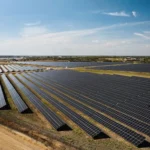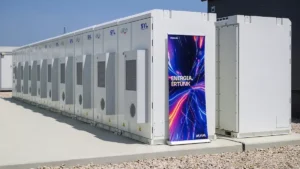



E.ON Hungary has completed its comprehensive grid development program launched in 2022, a multi-year effort to upgrade the network’s ability to absorb power from weather-dependent renewable sources, especially residential solar systems.
Daytime power generation from household solar panels has grown sharply, but much of this energy is produced when and where it isn’t immediately consumed. The program addressed this mismatch through targeted capacity expansion and infrastructure renewal, ensuring the grid can handle peak renewable inflows without compromising stability.
Six new substations and extensive network renewal
The project delivered six new substations and expanded several existing ones across the Dunántúl, Pest county and Budapest networks operated by the group. These facilities secure power supply for entire regions, including the Tolna-Mözs substation serving Szekszárd, the green-roofed Kelenföld substation, and the Őrmező substation in Budapest.
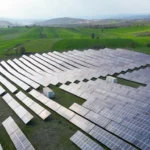
Additional capacity boosts took place at sites such as Ráckeve, Biatorbágy, Dunavarsány, Angyalföld and Zugló. More than 1,800 kilometres of low- and medium-voltage lines were built or modernised, while over 2,800 new or upgraded transformers went live.
Over 1,000 MW for new solar connections
The total program created more than 1,000 MW of additional capacity, enabling the grid to connect new solar installations and support both residential, corporate and industrial growth. Residential, business and industrial power delivery is now more efficient, paving the way for further investment.
Since 2020, the number of solar plants on E.ON’s network has risen sharply. Hungary now has around 350,000 household solar systems in operation, with more than 200,000 on E.ON’s service area alone.
Investments totalled around HUF 115 billion in northern Transdanubia, HUF 30 billion in southern Transdanubia, and HUF 40 billion in Budapest and Pest county. Environmental considerations were prioritised, such as replacing 50 km of overhead lines with underground cables and removing 450 poles in the Budai Tájvédelmi Körzet nature reserve.
Continuous investment in grid resilience
Alongside these major projects, E.ON executed thousands of smaller upgrades, swapping out equipment for higher-capacity alternatives and installing new sensors and control systems. The result is a more modern, higher-capacity network that delivers stable power supply and reduces outage risks.