


Hungarian property group Futureal has acquired Premier Outlet Budapest, the country’s largest outlet shopping centre. The transaction closed in October 2026, with Futureal assuming asset management responsibilities and Frey remaining the centre’s operator.
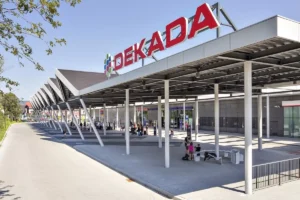
The acquisition adds a retail property with 23,000 square metres of lettable space, more than 90 stores and an occupancy rate of 99.7% to Futureal’s Hungarian portfolio. Located in Biatorbágy, near the M1 and M0 motorways, Premier Outlet Budapest opened in 2004.
More than 90 stores and almost full occupancy
Premier Outlet Budapest’s tenant portfolio includes Nike, Adidas, Hugo Boss, Tommy Hilfiger, Lacoste, GANT, GAP, Karl Lagerfeld, Samsonite and Calvin Klein. The centre accommodates Nike’s largest outlet unit in Central Europe and Adidas’s largest outlet store in Eastern Europe.
With an occupancy rate of 99.7%, the property enters Futureal’s portfolio with almost all available retail space leased. The group intends to use its experience developing Corvin Plaza and Etele Plaza to strengthen the centre’s commercial performance.
Futureal shifts towards income-producing assets
The transaction represents a change in Futureal’s investment strategy in Hungary, where the group has primarily focused on developing residential, office and commercial properties.
The company is now targeting established assets that generate recurring income and offer opportunities to increase value through active management. Futureal plans to improve the outlet centre’s tenant mix and customer experience while exploring commercial synergies with Etele Plaza, its shopping centre in Budapest’s District XI.
Further acquisitions planned as investor interest returns
Futureal expects additional property acquisitions as it increases its exposure to income-producing assets. Olivér Treiber, the group’s chief investment officer, said changes in Hungary’s investment environment had prompted the company to accelerate its strategy.
“As the market environment becomes more predictable, the pricing of income-producing properties can at times offer a more attractive risk-return profile than a new development,” Treiber said.