


One of Budapest’s busiest tourist districts is preparing to introduce Hungary’s most comprehensive regulatory frameworks for short-term rentals, opting for a quota-based system instead of an outright ban as local authorities seek to balance tourism with housing affordability.
The municipal council of Budapest’s District VIII (Józsefváros) has approved the basic concept of a new regulatory framework for Airbnb-style accommodation, with detailed rules expected to be finalized by October before entering into force in January 2027.
Unlike neighboring District VI, which banned new short-term rentals altogether, Józsefváros has chosen a more flexible approach that limits the sector’s expansion while preserving existing operators under specific conditions.

Three-tier quota system
At the district level, Airbnb-style accommodation will be capped at 3.5% of the total housing stock, effectively freezing the market at its current size. Municipal data show that the district had approximately 1,760 registered short-term accommodation units as of March 2026, representing roughly 3.5% of its 48,444 residential properties.
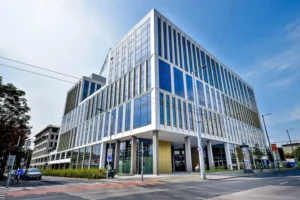
In areas with the highest concentration of tourist accommodation, including the rapidly developing Corvin Quarter, the ceiling will be set at 5%, while individual apartment buildings will be limited to a maximum of 20% of their floor space being used for short-term rentals.
Residents gain decisive role
A key feature of the proposal gives residents significantly greater control over short-term rental activity within their buildings. New Airbnb-style apartments will only be permitted if approved by the condominium’s residents.
Existing operators will initially retain their licenses, but homeowners’ associations will have the authority to vote on whether those rentals should continue operating in the future, introducing a new layer of local oversight into the licensing process.
Housing affordability at the center
District VIII argues that the rapid expansion of short-term rentals has contributed to tighter housing supply, higher residential prices and increasing pressure on local communities. Officials say the new framework seeks to strike a balance between supporting tourism and improving housing accessibility for residents.

The proposal also reflects a broader shift in Hungary’s approach to regulating short-term accommodation as policymakers increasingly link the growth of platforms such as Airbnb to housing affordability challenges in the capital.
Premium neighborhoods already above proposed limits
According to local media, the Palace Quarter has nearly 8% of its housing stock operating as short-term rentals, while the Corvin Quarter exceeds 7%, both above the proposed 5% neighborhood cap.
Although existing properties will be allowed to continue operating, the new rules would prevent further expansion until those ratios gradually fall below the prescribed limits.