

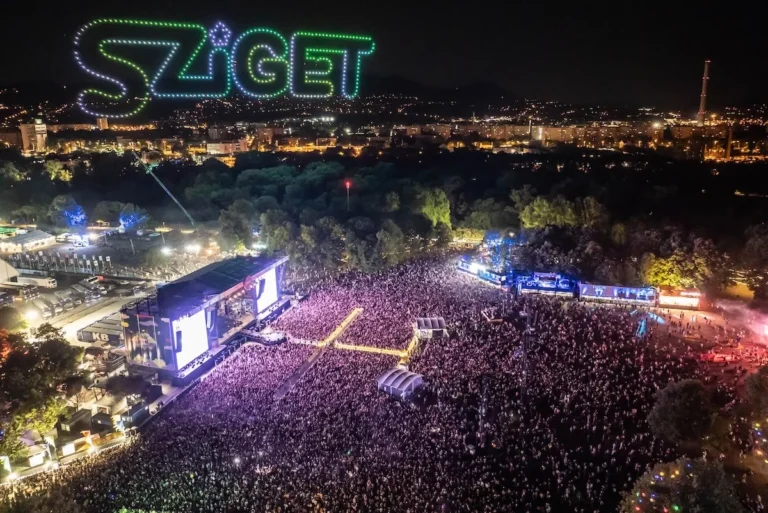
Visitors to Budapest’s Sziget Festival spent an average HUF 182,000 (€460) in connection with the event this year, with foreign festival-goers spending more than twice as much as Hungarians, according to a new survey by GKI Economic Research.
Hungarian visitors spent an average HUF 108,000, compared with HUF 255,000 for foreign visitors. The latter figure includes an average HUF 95,000 spent on international travel.
Foreign visitors stay longer
Festival-goers spent an average 3.2 days at Sziget, while 44% attended all five days and 31% visited for only one day. Foreign visitors stayed slightly longer, spending an average 3.5 days at the festival.

The average age of respondents was 26. One-quarter were aged 20 or younger, while one in five was over 30. Foreigners represented 47% of visitors, while around half of all respondents were attending Sziget for the first time.
Foreign visitors spend another HUF 98,000 outside Sziget
Among visitors who do not live in Budapest, 83% spent at least one additional day in the capital and the surrounding area outside their time at Sziget. On average, they stayed for another three and a half days.
Their additional spending averaged HUF 98,000, of which 38% went to accommodation, 31% to food and beverages, 17% to entertainment and recreation and 13% to domestic transport.
After excluding international travel but including spending elsewhere in Budapest, GKI calculated that a foreign Sziget visitor left approximately HUF 260,000 in the Hungarian economy during their stay.
Sziget data indicate that around 58,000 foreign visitors attended this year’s festival. Based on average spending, GKI estimates that they generated approximately HUF 15 billion for the Hungarian economy. Around 90% said they travelled to Hungary specifically because of Sziget.

28% of foreigners consider Sziget expensive
Despite the level of spending, most international visitors did not consider Sziget particularly expensive compared with festivals elsewhere. Some 28% of foreign respondents described Sziget as expensive in international comparison, while 11% considered its prices low.