

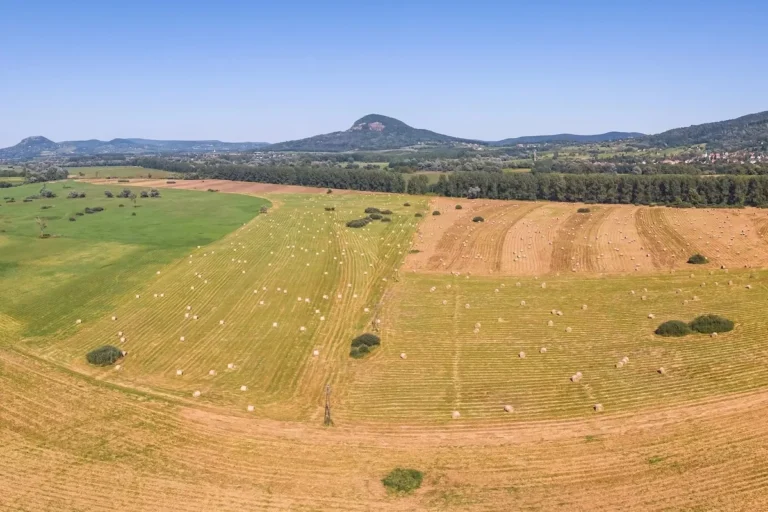
The average price of arable land reached HUF 2.49 million per hectare last year, up 3.9% from HUF 2.39 million in 2024, according to the latest farmland market analysis by MBH Mortgage Bank.
Across the broader agricultural land market, the MBH farmland index increased by 3.3%, reaching 350.3 points from 339.1 points a year earlier. That was a significantly slower increase than the roughly 10% annual growth recorded in 2022 and 2023.
A HUF 2.5 million average hides a huge regional gap
The national average gives only part of the picture. The price of agricultural land varies dramatically depending on location, soil quality, productivity and increasingly, water availability.

Hajdú-Bihar remained Hungary’s most expensive county for arable land, with an average price of approximately HUF 3.59 million per hectare. Tolna, Győr-Moson-Sopron and Fejér were also among the most expensive counties. At the other end of the market, Nógrád, Borsod-Abaúj-Zemplén and Zala recorded the lowest average prices.
The differences become even more pronounced at district level. In the Debrecen district, the average price reached approximately HUF 5.6 million per hectare. Prices in the Hajdúszoboszló and Hajdúböszörmény districts also exceeded HUF 4 million per hectare. In Hungary’s cheapest regions, average prices remained below HUF 1 million per hectare.
Northern Great Plain remains the most expensive region
At regional level, the Northern Great Plain retained its position as the most expensive area for arable land. Hajdú-Bihar’s continued leadership is particularly notable because agricultural land values in the area have remained supported by strong demand and favourable agricultural characteristics.
According to MBH’s analysis, counties that have experienced persistently lower rainfall, including Békés and Bács-Kiskun, have recorded more moderate price appreciation in recent years.
By contrast, areas where rainfall conditions have remained more favourable, including Zala, Szabolcs-Szatmár-Bereg and Borsod-Abaúj-Zemplén, have seen stronger appreciation. That difference points to a factor that could become increasingly important for agricultural real estate: water.